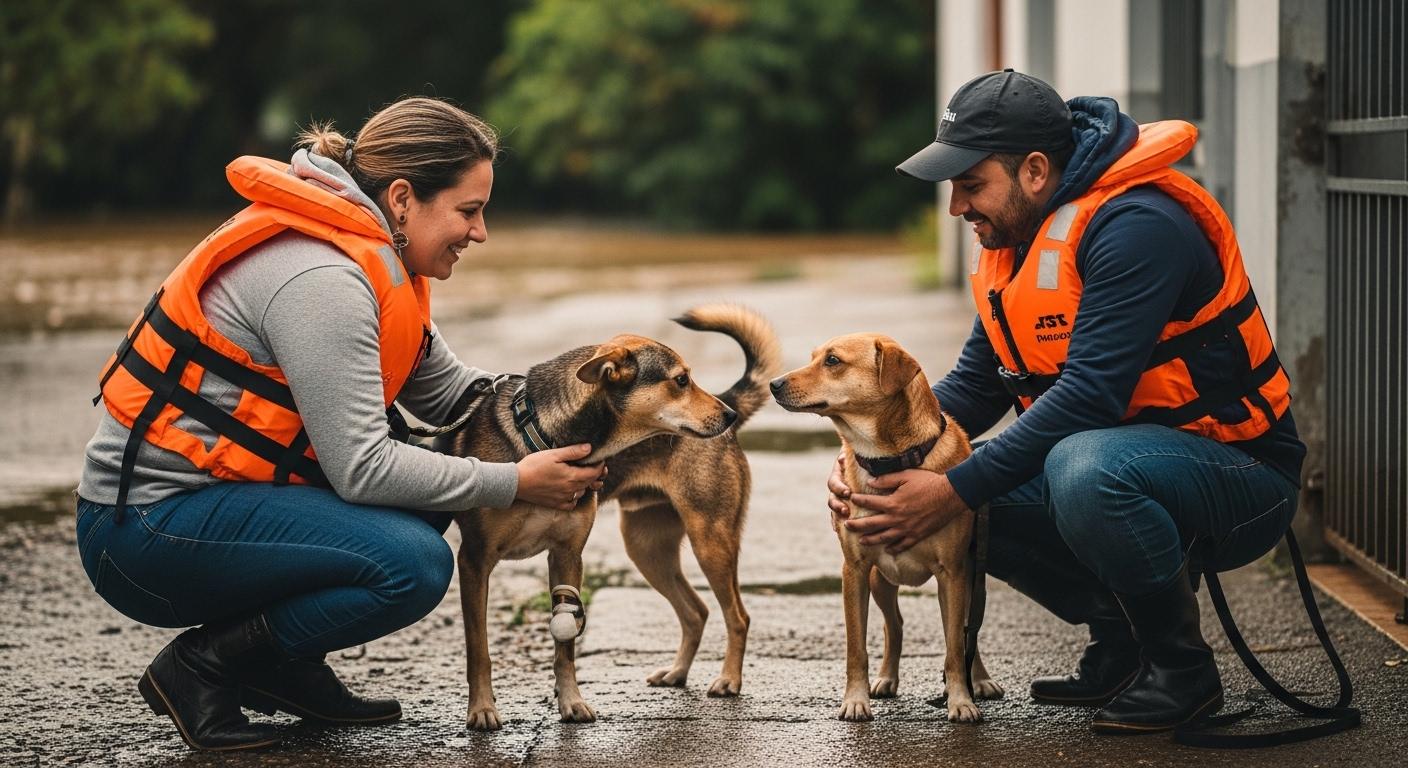
Rescuers with dogs and a calf after floods in Brazil.
Updated: March 16, 2026
This analysis begins with the reality of dogs Pets Brazil—a daily presence shaping urban life, policy debates, and rescue responses in Brazil during climate-driven disasters. Across flooded bairros and rain-wracked suburbs, companions are not mere bystanders; they test the limits of municipal planning, charitable networks, and family routines.
Context: floods, disasters, and animal welfare in Brazil
Brazil’s urban centers have faced increasingly frequent heavy rainfall events, often overwhelming drainage systems and shelter networks. In these moments, the welfare of dogs and other companion animals becomes a proxy for how communities allocate resources, coordinate volunteers, and politicize resilience. Rescue groups report spikes in intake at shelters during and after floods, while keepers of pets confront tough choices—whether to relocate, rehome, or shelter animals in place when infrastructure fails.
Beyond the immediate crisis, the situation exposes gaps in veterinary access, vaccination coverage, and microchipping—factors that affect both animal welfare and public health. When dogs roam into high-risk zones or become separated from owners, the human-animal bond translates into a demand for swift, coordinated responses from municipalities, NGOs, and health agencies. This context matters for Pets Brazil readers because it frames how households manage risk, care costs, and long-term recovery for their four-legged companions.
Policy and cultural dimensions
Policy discussions around pets in Brazil frequently intersect with cultural attitudes toward animals, urban land use, and municipal budgets. While some cities maintain active stray-animal programs, others grapple with licensing, vaccination mandates, and shelter standards that reflect local capacity. A notable cultural facet is the desire to honor animal companions in meaningful ways. In São Paulo, media coverage has highlighted conversations about pet burial in family graves, a reflection of how communities reframe grief and memory in an increasingly dense urban landscape. The idea that a loyal dog can influence policy—by inspiring a law or a municipal practice—illustrates how affection for animals can translate into pragmatic changes, even if implementation varies across states.
These dynamics matter because they shape how ordinary Brazilians plan for emergencies. If laws or guidance recognize pets as members of the household with equal stakes in safety and dignity, emergency planning becomes more comprehensive—and shelters can receive more predictable flows of animals and owners seeking reunification after a disaster.
Rescue, shelters, and community action
In flood scenarios, rescue operations often hinge on networks that span non-governmental organizations, volunteers, veterinary clinics, and local communities. Dogs and other pets may ride out floods in makeshift enclosures or temporary shelters, while families await reunification. The resilience of these networks depends on clear triage protocols, supply chains for food and medical care, and the ability to track animals across different care points. Cross-city lessons—such as rapid intake, vaccination continuity, and humane handling—translate across contexts and help communities prepare for multiple waves of emergencies.
Beyond the rescue itself, long-term recovery depends on shelter capacity, adoption pipelines, and preventive care. Microchipping and owner registration reduce separation during evacuations, while foster networks can alleviate overcrowding. Community campaigns that pair pet welfare with human wellbeing—for example, mental-health support for families affected by disaster—have shown promise in pilot programs across urban centers. The upshot is that resilient pet welfare demands both operational readiness and social trust among residents, authorities, and volunteers.
Actionable Takeaways
- Prepare pet disaster kits with water, food, leashes, medications, and copies of vaccination records; update microchip information annually.
- Invest in flood-resilient shelter space and clear intake pathways that can handle simultaneous arrivals of people and their pets during emergencies.
- Foster cross-sector coalitions among municipalities, veterinary schools, NGOs, and community groups to coordinate rescue, vaccination, and reunification efforts.
- Integrate pet welfare into broader emergency planning, including evacuation routes, temporary housing, and post-disaster mental-health support for families.
- Encourage responsible ownership through licensing, vaccination, and microchipping to reduce disease risk and facilitate reunification after disasters.
- Promote culturally informed policy discussions, such as dignified burial options for pets in family graves where appropriate, while ensuring equity and accessibility across cities.